 ™
Is your lip balm making chapped lips worse this fall?
November 3, 2026
Every fall someone stops at our table with cracked lips and a balm in their pocket. They put it on all day and their lips still feel tight by supper. Sometimes the answer is the lip balm making chapped lips worse. That happens more often than you'd think, and the fix usually starts with reading the label.
We make soap, not medicine, so this post sticks to what dermatologists have published and what we've learned handing people a tin and asking what's in it. Most people don't know. Most of us didn't either, until we started reading the small print.
Why lips chap first when the furnace comes on
Lip skin is thin, and it has no oil glands of its own. The rest of your face has some built-in protection. Your lips mostly rely on whatever you put on them.
Then the heat goes on. Furnace air is dry, and the air outside gets colder and drier at the same time. You go from one to the other all day, and your lips are usually the first place you feel it.
The American Academy of Dermatology names cold, dry weather, sun damage and frequent lip licking as common reasons lips get dry and chapped. That last one matters more than people expect, and we'll come back to it.
A tingle test for the lip balm making chapped lips worse
A lot of balms are made to feel like they're working. They tingle, or they feel cool, or they taste like candy. That sensation comes from flavorings and other additives, and on lips that are already cracked, it can mean irritation.
The test is simple. Put a thin layer of your usual balm on and pay attention for a minute. If it tingles, stings, burns or goes cold, turn the tube over and look for these. The AAD says they can irritate chapped lips:
- Cinnamon, citrus, mint or peppermint flavoring
- Camphor, menthol or eucalyptus
- Salicylic acid
If you find one, that may be your answer. The balm feels good for a moment and then leaves your lips more irritated than before, so you reach for it again. We think that loop explains a lot of the people who tell us they "use balm constantly" and still crack.
Flavored balms have a second problem. If it tastes good, you lick it off. Which brings us to the trap.
What a plain, gentle balm label looks like
The AAD's look-for list includes castor seed oil and ceramides, along with dimethicone and mineral oil. It also suggests choosing balms labeled fragrance free. None of that is exciting to read. That's sort of the point.
A good lip balm label is usually short and a little boring. Waxes and butters and oils that sit on top of the lip and stay there. No flavor that makes you want to taste it, and nothing that announces itself with a cold rush.
The lick-and-reapply trap goes like this. Your lips feel dry, so you lick them. Saliva evaporates, and the AAD says that can make dryness worse. So you lick again. The AAD's advice is plain: when you catch yourself licking your lips, put on a non-irritating balm instead.
We're holding ourselves to the same standard. Before we say anything here about what's in our own lip balm, which you can see on its product page, we're checking its ingredient list against this one. You should be able to do the same with any tin, including ours. If you want to know how we think about ingredients across everything we make, our ingredients page is the place to start.
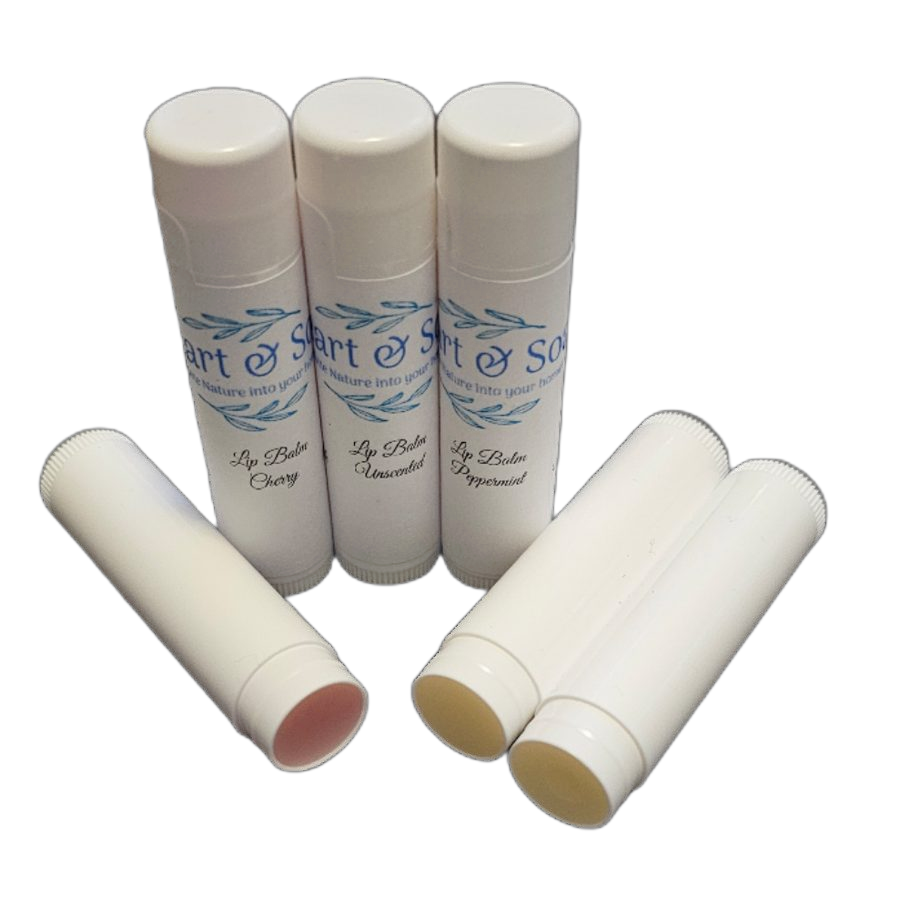
How we use balm from morning to bedtime, and when to see a doctor
During the day we keep a plain balm where our hands already go. One in a coat pocket, one by the sink. We put it on after washing our face and after eating. When we notice we're licking our lips, we put it on instead. That last habit takes about a week to stick.
Outdoors, the cold and wind do most of the damage. A scarf pulled up over your mouth helps more than you'd expect. Reapply before you go out, not after you come back in with lips already stinging.
At bedtime, dermatologists quoted by U.S. Dermatology Partners suggest a thick layer of balm with something like shea butter in it. Put on more than feels necessary. Furnace air keeps working all night, and a heavy layer has more time to stay put than a quick swipe in the afternoon.
Leave the peeling bits alone. The same dermatologists say not to pick at flaking lips or scrub them with anything abrasive. We know it's tempting. A thick layer of balm overnight usually does a better job than your teeth.
Here is where soap makers stop and doctors start. The AAD says you should notice improvement within two to three weeks of following its tips. If your lips haven't healed in that time, it recommends seeing a board-certified dermatologist.
Dermatologists also say crusting at the corners of the mouth, or lips that hurt or itch, can be a sign of an allergy or an infection that needs a doctor. Don't try to wait that out with a different balm. If you need something stronger than a plain balm, ask a pharmacist or dermatologist what's right for you.
Bring your tin to the fall fair
We'll be at the Fall Wine & Craft Fair on Nov. 7, and you can find the details on our events page. Bring whatever balm is in your pocket right now. We'll read the label with you, show you ours, and you can decide for yourself what goes on your lips this winter.
Questions we get asked
Why does licking my lips make them drier?
Saliva evaporates off your lips and takes moisture with it, so they feel drier than before. The American Academy of Dermatology suggests putting on a plain, non-irritating balm whenever you catch yourself licking.
My lip balm tingles. Does that mean it's working?
No. Tingling or cooling usually comes from flavorings like mint or ingredients like menthol and camphor, which the AAD says can irritate chapped lips. If your lips sting when you put it on, read the label.
How long should chapped lips take to get better?
The AAD says you should notice improvement within two to three weeks of good habits. If they haven't healed by then, or if they crust at the corners, hurt or itch, see a doctor.