
Epsom salt vs Dead Sea salt bath, and what a soak does
November 24, 2026
Once the furnace kicks on for the season, the bathtub starts looking good again. House air dries out, hands crack at the knuckles, and a jar of bath salts seems like the answer. We sell bath salts made with both Epsom and Dead Sea salt, so we owe you a straight answer about an Epsom salt vs Dead Sea salt bath before you buy a jar.
In short, the soak is lovely, the salt makes it feel like an occasion, and most of the bigger claims you've read don't hold up. Below is what we know and where the evidence runs out.
What's in an Epsom salt vs Dead Sea salt bath
Epsom salt is one compound, magnesium sulfate. It takes its name from Epsom, a town in England, and it has nothing to do with the sea. When it dissolves in your bath it splits into magnesium and sulfate.
Dead Sea salt is whatever the water leaves behind, which is a mixture of several salts. How much of each depends on where it was gathered and how it was processed, so two bags sold under the same name can differ.
That makes the label the honest way to compare them. Read the ingredients, the directions and any warnings, and judge the jar in your hand rather than the name on the front.
Our scented bath salts made with Epsom and Dead Sea salt use both. We like how the coarse crystals look and how the scent opens up in warm water. That's the reason we make them, and we won't pretend there's a medical one.
The magnesium mostly stays in the tub
You've probably heard that an Epsom bath lets your body soak up magnesium through the skin. It's a tidy story. Nothing in the evidence supports it.
Healthline says there is no evidence that the magnesium and sulfate in an Epsom bath are absorbed through the skin. National Geographic reports the same thing from the experts it spoke with. There is no definitive evidence that people absorb a meaningful amount of magnesium this way.
Your skin's main job is to keep things out, and food or an oral supplement gets magnesium into you far more efficiently. If you think you're short on magnesium, that's a question for your doctor or a pharmacist, not a soapmaker. We won't suggest a supplement or a dose, and you should be wary of anyone selling bath salts who does.
So what does a soak do? Healthline puts it plainly. A hot bath can be relaxing, but there's no good evidence that an Epsom bath does anything special on its own.
What you get is warm water, a closed door and a few minutes nobody can interrupt. We think that's worth having, and the salt makes the water feel softer and carries the scent.
How much salt, how warm, how long
Most guides call for 1 to 2 cups of Epsom salt in a full tub. Greatist suggests starting with about half a cup if your skin is sensitive, which is how we'd start too. Here's the routine we'd give a friend.
- If you've never used Epsom salt, do a patch test first, as Healthline suggests. Dissolve a little in water, dab it on a small patch of skin and wait.
- Run the bath warm, not hot. Hot water strips skin of its natural oils, according to the American Academy of Dermatology.
- Pour in half a cup to start, or 1 to 2 cups once you know your skin is fine with it. Swish until it dissolves.
- Soak for 5 to 10 minutes. That's the AAD's advice for baths and showers when skin is dry.
- Space your soaks out. Greatist says once a week or every 2 to 3 days.
Ten minutes is shorter than many bath salt guides suggest. In January, with the heat running, we side with the dermatologists. A long, very hot soak is the surest way to step out feeling tight and itchy.
That also answers a question we get a lot: do bath salts dry out your skin? In our experience the water temperature and the clock matter more than the salt. We can't promise salt agrees with everyone, though. If your skin feels tight or stings afterward, use less, run the water cooler or skip it.
After the tub, and who should skip the soak
What you do in the next three minutes counts as much as the bath. Pat skin dry instead of rubbing, the AAD advises, and put on moisturizer while you're still a little damp, within about 3 minutes of getting out.
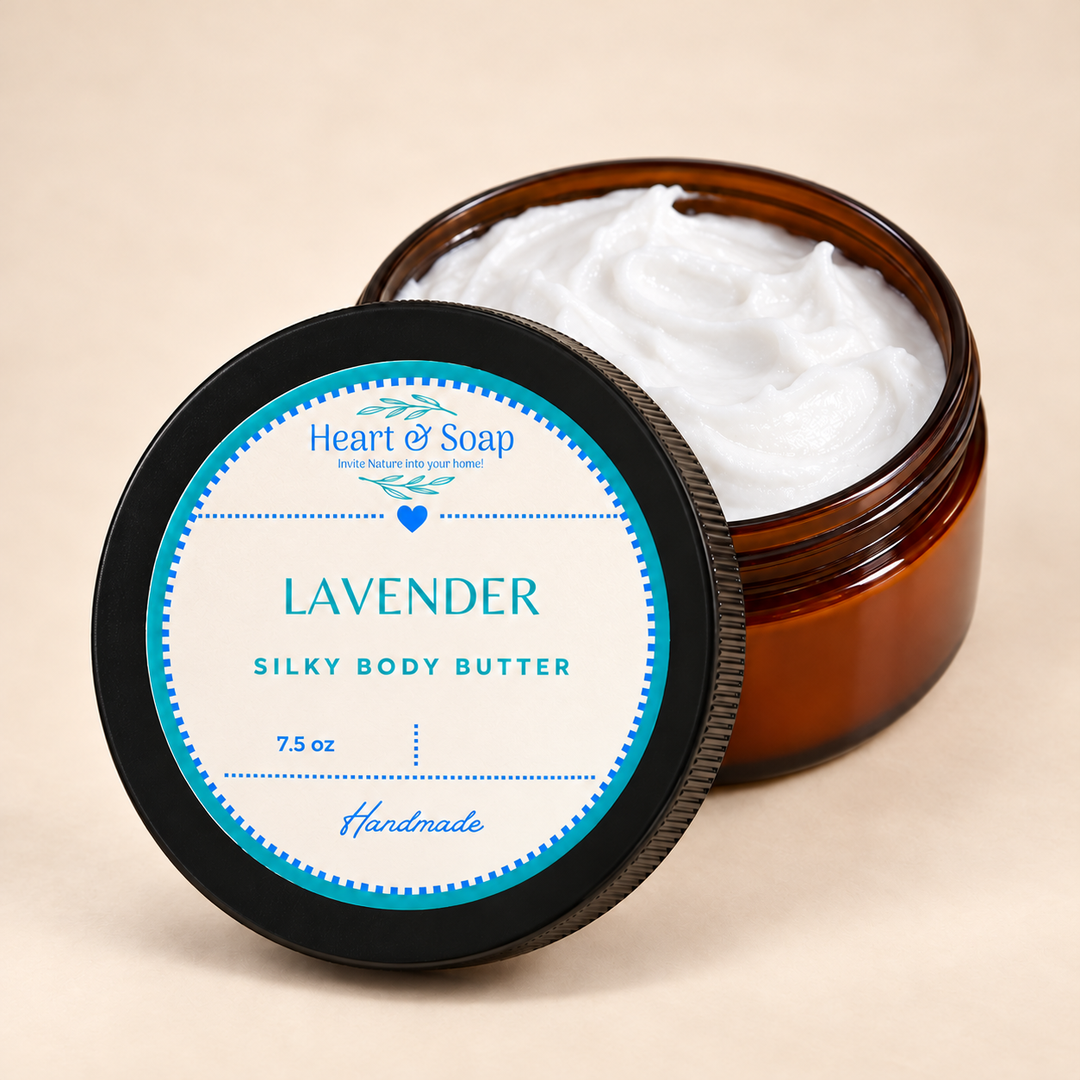
Keep the jar where you can reach it before you're dressed. Our silky body butter spreads easily on damp skin, and a little covers a lot. If it sits across the room, you'll be dry and cold before you remember it.
If you wash in the bath, use something mild. For dry skin, the AAD recommends a gentle, fragrance-free bar or cleanser in warm water. Our goat milk soap is one of our gentler bars. If you need it fragrance-free, check the label or ask us which ones are unscented before you buy.
Some people should skip the salt. Healthline advises against soaking broken skin in an Epsom bath, so wait out cuts, scrapes and anything raw. Skip it too if your patch test left your skin red or itchy. If a dermatologist is treating you for a skin condition, ask them before you add anything to the tub.
Bath salts are a nice thing to give someone in December, and we like making them. They're a reason to sit in warm water for ten minutes, and the rest is marketing.
If you'd like to smell the jars before you buy, we'll be at the England Street Christmas Market on December 5. Bring your label questions to the table. Times and details are on our events page.
Questions We Get Asked
How much Epsom salt should I put in a bath?
Most guides call for 1 to 2 cups in a full tub. If your skin is sensitive, start with about half a cup and see how it feels afterward.
Do bath salts dry out your skin?
Hot water and long soaks are usually the bigger problem. Keep the water warm, soak 5 to 10 minutes, pat dry and moisturize within a few minutes while your skin is still damp.
How often can I take a bath salt soak?
Common guidance is once a week or every 2 to 3 days. If your skin feels tight or itchy, cut back or use less salt.